June 9, 2026 · 5 min read
Outdoor lighting design for Montreal homes
How to layer outdoor lighting at a Montreal home: warm versus cool light, motion and day sensors, lighting poles, and wiring done to code. Call (514) 909-3773.
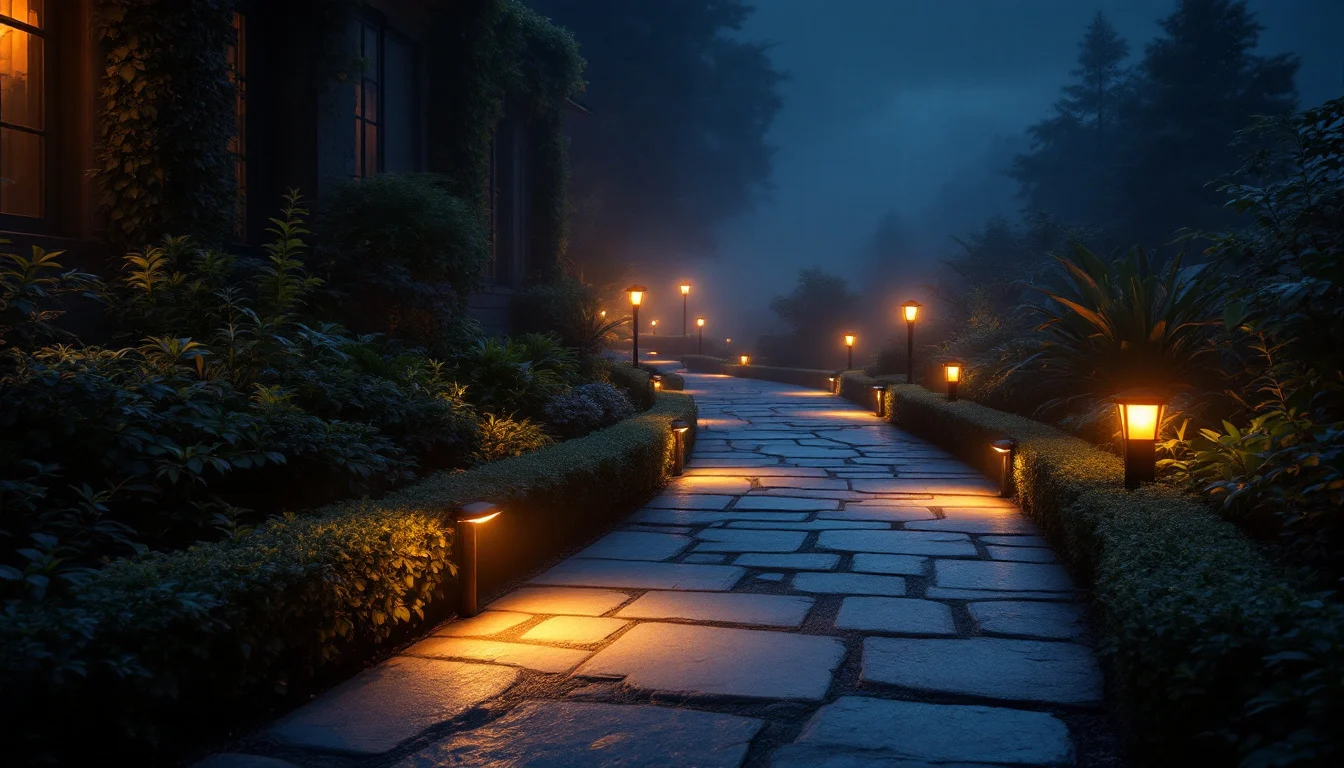
By the second week of June, Montreal serves up evenings that stretch until almost ten. You eat outside, the kids stay out, and the yard becomes an extra room. Then the light goes, and in most yards one of two things happens: everything disappears, or a single floodlight over the deck turns the place into a parking lot. Neither one is a lighting plan. Both are fixable.
Good outdoor lighting is not about buying more fixtures. It is about deciding what deserves light, what color that light should be, and how it turns itself on and off without you thinking about it. Here is how an electrician works through it.
Layer the light: ambient, task, accent
Designers talk about three layers of light, and the idea works as well outside as in.
Ambient light is the general glow that lets you move around: a wall fixture beside the back door, a ceiling light on the balcony, a lamppost near the walkway. Task light is brighter and aimed at a spot where something happens: the steps, the barbecue, the lock on the side door. Accent light is the quietest layer and the one that makes a house look finished after dark: a soft wash across the brick, a small uplight at the base of the maple, a low line of path lights along the walk.
The classic mistake is doing all of it with one powerful flood. It flattens the yard, blinds anyone who looks toward it and leaves hard black shadows everywhere else. Several small, well-aimed sources at lower brightness beat one big one every time. Aim fixtures down or across, never at eye level. Your neighbours will notice the difference too.
Warm white or cool white for outdoor lighting
The color of light is measured in kelvins. Around 2700 K, light is warm and golden, close to an old incandescent bulb. At 4000 K and up it turns cool and bluish, like a workshop or an indoor parking level.
Color changes how people read a place. High-end grocers display meat and produce under warm light because it makes the food look alive. Jewellers use a sharp but warm light because it flatters whatever sits under it. Your house obeys the same rules. Warm light shows brick, wood and stone at their best on a summer evening. Cool light makes the same wall read like a loading dock.
The practical rule: warm white, 2700 to 3000 K, anywhere people sit, eat or gather. Save cooler white for the few spots where plain visibility is the only job. And keep one color temperature per zone. Mixing whites on the same facade is what makes lighting look accidental.
Motion sensors and day sensors do the remembering
Two small devices remove the light switch from your evening.
A day sensor, also called a photocell, reads the daylight and switches the fixture on at dusk and off at dawn. It is the right tool for ambient and entrance lighting: the house is never dark at night and never burning power at noon.
A motion sensor wakes a light only when something moves. It belongs in the utility zones: the side of the house, the shed, the driveway.
The combination beats either one alone: a low dusk to dawn glow that steps up to full brightness when the sensor picks up movement. Nobody has to remember a switch in June or hunt for one in the dark in January.
Lighting poles and the wire you never see
A lighting pole at the end of a walkway is the kind of detail that finishes a property. It is also a complete electrical installation: a buried circuit, cable rated for burial, a trench dug to the depth the code calls for, connections inside weatherproof boxes, and protection upstream at the panel.
An extension cord run through the flowerbed is none of those things. It spends the summer baking in the sun and the winter under ice, feeding a fixture that was never meant to be plugged in permanently.
Outdoor wiring done to code
Rain, freeze and thaw, minus 30 in January: everything electrical outdoors lives in the hardest conditions your home has. The code accounts for that. Fixtures carry ratings for wet or damp locations. Outdoor receptacles need GFCI protection, a ground fault circuit interrupter that cuts the power the moment current leaks where it should not, through water or through a person. Receptacle covers have to stay weatherproof even with a cord plugged in. Grounding is not optional.
In Quebec, electrical installation work must be done by a licensed contractor. That is not paperwork for its own sake. It is what guarantees the circuit under your lawn was built to sit there for decades of snow.
If you are sketching a lighting plan for this summer, the electrical side is our work. Lighthouse Electrique has installed pot lights, wall fixtures, lighting poles, photocells and motion sensors across Greater Montreal since 2007, always on a circuit built to code. Read about our lighting installation service, or call (514) 909-3773 and tell us what you want your yard to do after dark. We will tell you what it takes.
Better to call early than too late.
24/7 Emergency Service: a firm price before any work starts.
Call (514) 909-3773 Request a callback