February 24, 2026 · 5 min read
Signs your electrical panel is at its limit
Fuse boxes, 100 amp service, warm breakers: how to tell a Montreal home's electrical panel is at its limit, why insurers care, and what an upgrade involves.
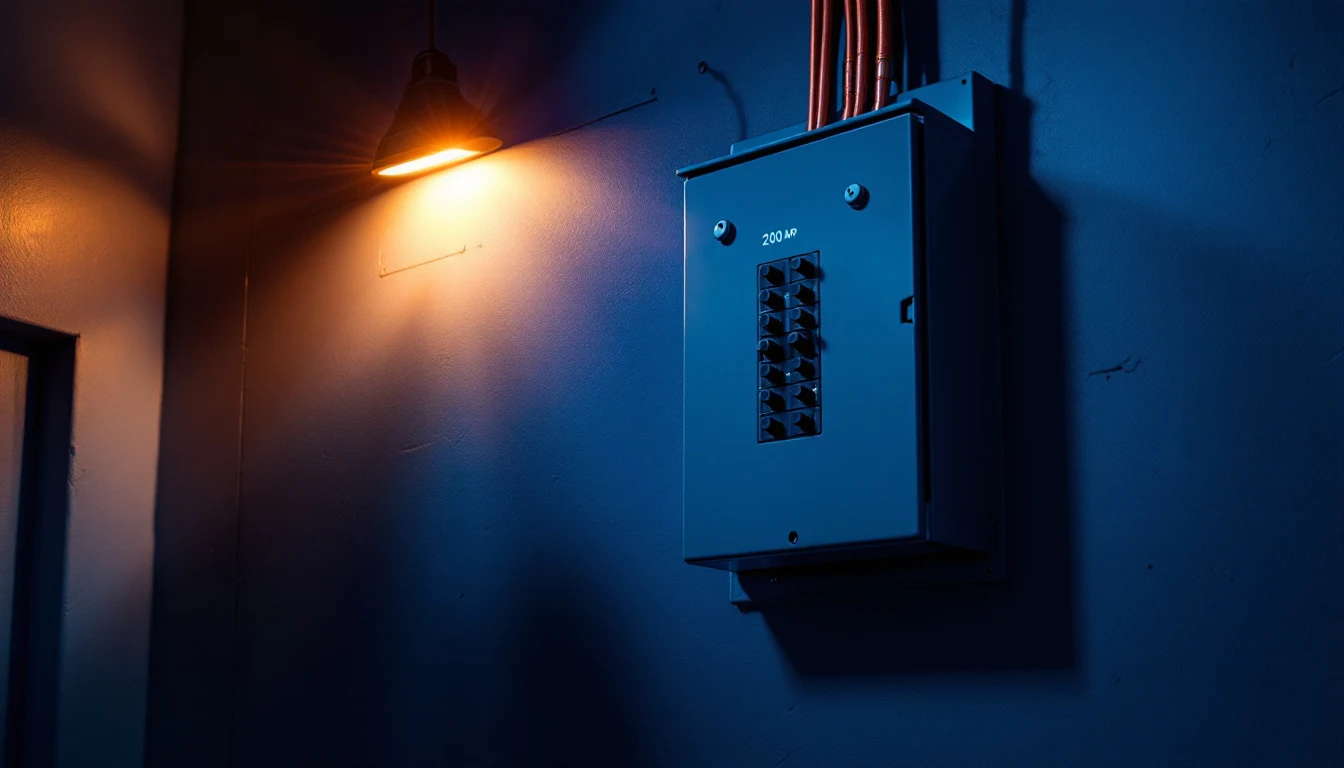
By late February, a Montreal electrical panel has been working hard for months. The baseboards have run since November. The water heater never gets a break. The dryer, the kettle and the block heater all want their share at the same time. If your panel is close to its limit, this is the season it shows.
Most panels do not fail suddenly. They give warnings, often for years. Here is how to read them.
A fuse box is the clearest sign
If your panel still uses screw-in fuses, the question is not whether to upgrade. It is when. A fuse box almost always means the service and much of the wiring behind it date from another era, sized for a household that used a fraction of what we ask of it today.
The fuses themselves are not the main danger. The habit they encourage is. When a fuse blows every week, someone eventually replaces it with a bigger one. The circuit stops blowing, but the wire in the wall now carries more current than it was built for, and the protection that should react to overheating no longer reacts in time.
Fuse panels also tend to come with 60 or 100 amp service and no free spots. There is no room for a new circuit, which is often the moment a homeowner discovers the panel’s age in the first place.
Is 100 amps still enough?
A 100 amp service was generous when it was installed. It had to carry lights, a fridge, a range and maybe a dryer. A Montreal household today asks far more of it: electric baseboards or a heat pump, a water heater, an induction range, air conditioning in summer and, increasingly, an EV charger drawing a steady 240 volts for hours at a time.
Whether 100 amps is still enough for your home is not a matter of opinion. The electrical code sets out a load calculation that adds up your heating, appliances and circuits. Some homes pass comfortably. Others pass on paper with no headroom left, which is when the main breaker starts tripping on the coldest nights of the year.
Three practical signs the answer is no: the main breaker trips in deep winter, the panel has no free slots for a new circuit, or an electrician has already told you an EV charger will not fit on the current service. Most upgrades move the home to a 200 amp panel, sometimes with an enlarged service entrance to match.
Warning signs you can see, hear and smell
A panel rarely fails without notice. Watch for the classics:
- Breakers that trip again and again on the same circuit
- Lights that flicker or dim when the heating or a large appliance kicks in
- Sizzling, buzzing or crackling sounds from the panel
- A burning smell near the panel or an outlet
- Outlets or switch plates that are discolored, warm or sparking
- A breaker that is warm to the touch
That last one deserves a word. A working breaker gives off a little heat, and that is normal. A breaker warm enough to notice usually points to a loose connection or a circuit running near its limit for hours. Heat is resistance, and resistance where it does not belong is how electrical fires start. A warm breaker justifies a service call. A burning smell or a sizzling sound justifies cutting the power at the main breaker and calling an emergency electrician without waiting.
Why your insurer cares
Home insurers in Quebec pay close attention to electrical panels, for good reason: roughly one fire in five in Canada is electrical in origin, and faulty wiring is the leading cause. Quebec insurers have refused to issue or renew policies on homes with fuse boxes, aluminum wiring or missing grounding, or have set conditions before agreeing to cover them.
In practice, this shows up at renewal time or when a property changes hands. The questionnaire asks about the panel type, the amperage and the wiring. Answering fuse box and 60 amps can raise the premium, shrink your options or stall a sale until the panel is replaced. If the home also has aluminum wiring, the two issues are usually assessed and corrected together.
A good habit even when nothing seems wrong: have the electrical installation inspected about every four years. It is the same logic as rust-proofing a car in this climate. Checking costs little. Ignoring does not.
What a panel upgrade involves
An upgrade is more methodical than most people expect.
- The load calculation. An electrician establishes what your home actually needs, per the code, and confirms the right target, which for most homes is a 200 amp service.
- Permits and coordination. In Quebec, this work must be done by a licensed contractor. If the service entrance changes, the work is coordinated with Hydro-Québec, since the utility side of the connection belongs to them.
- The replacement itself. The power is cut, the old panel comes out, every circuit is transferred to a new breaker panel, connections are tightened to spec, the grounding is brought up to code and each breaker is labeled so you know what feeds what.
- Verification. The installation is checked before the power comes back on for good.
You end up with protection that reacts the way it should, room for the circuits you will want next, whether that is an EV charger, a spa or a finished basement, and one less difficult conversation with your insurer.
Not sure where your panel stands?
If your panel is showing any of these signs, have it evaluated before it picks the timing for you. Lighthouse Electrique has been diagnosing and replacing panels across Greater Montreal since 2007, from fuse boxes to full 200 amp service upgrades. Read about our electrical panel upgrade service or call us at (514) 909-3773. You will get a straight answer on whether your panel can wait.
Better to call early than too late.
24/7 Emergency Service: a firm price before any work starts.
Call (514) 909-3773 Request a callback