January 13, 2026 · 4 min read
Why breakers trip more in Montreal winters
Baseboard heat, a kettle and the dryer on shared circuits: why breakers trip more in Montreal winters, what they protect you from, when to call (514) 909-3773.
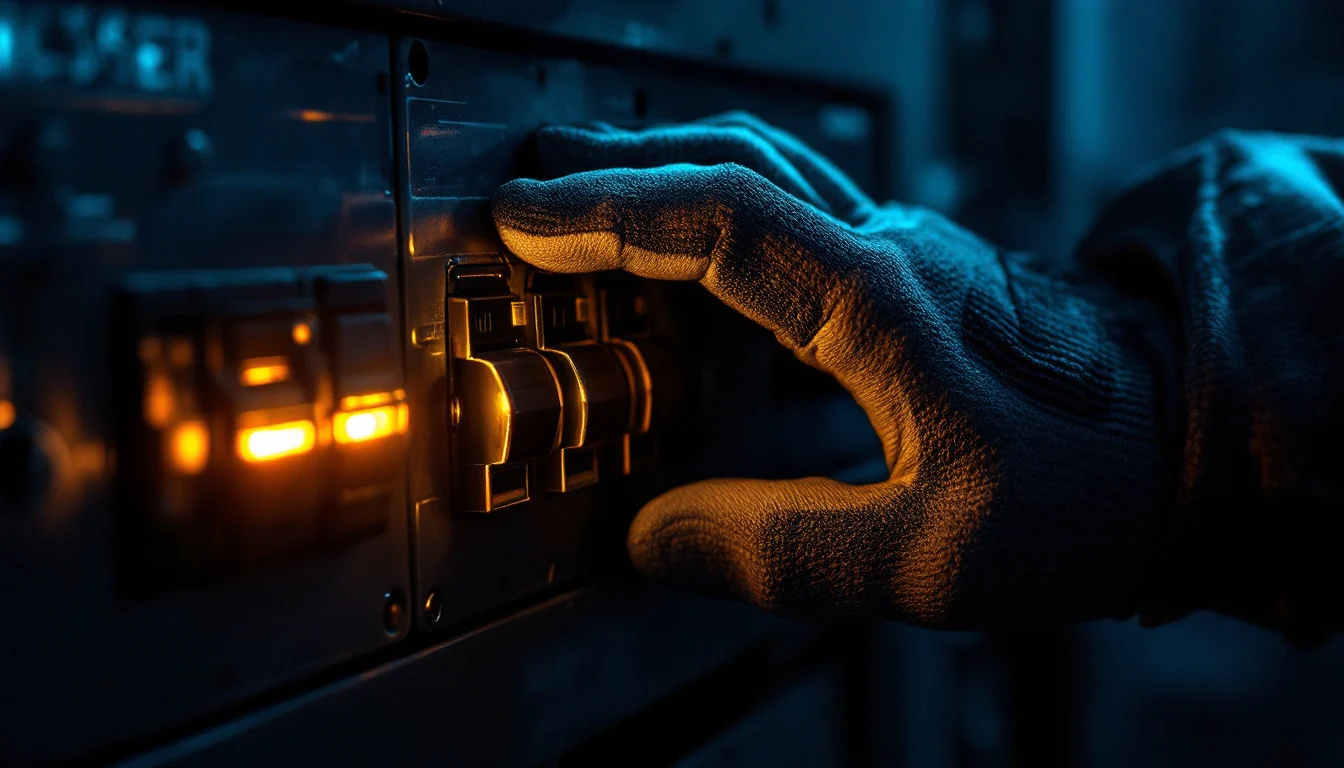
It is a January evening in Montreal. The baseboards have been running since morning, supper is on the stove, the dryer is spinning, and you plug in the kettle. Half the kitchen goes dark.
You know the routine. Down to the panel, find the breaker sitting halfway, flip it off and back on, return upstairs. If that walk has become part of your winter, this article explains what is actually happening, what the breaker is protecting you from, and how to tell a nuisance from a warning.
Winter stacks loads your wiring never expected
A circuit breaker trips when the current flowing through its circuit stays above what the wiring can safely carry. In summer, most household circuits work far below that limit. Winter is different, because almost everything that fights cold is a heavy electrical load.
A typical 120 volt household circuit is protected at 15 amps. A portable heater set to 1,500 watts draws about 12.5 amps on its own, most of the circuit before you plug in anything else. A kettle draws roughly the same. A toaster, a coffee maker, a hair dryer: each one plays in the same league. Baseboard heaters normally have their own 240 volt circuits, but they raise the total demand on the house.
Then add the winter extras: the car’s block heater, the dryer running more often, supper cooking while everything else is on. None of these is a problem alone. Sharing one circuit, they add up past 15 amps, the wire begins to heat, and the breaker opens the circuit before the wire does something worse.
A tripping breaker is doing exactly its job
A breaker is not a switch that fails when it trips. It is a protective device doing the one thing it exists to do: cutting power before the wiring overheats.
Wiring that carries more current than it is rated for gets hot. Hot wiring degrades its insulation. Degraded insulation is how fires start inside walls, where nobody sees them until they are established.
This is not theoretical. Montreal records more fires than anywhere else in Quebec, and figures from the province’s ministry of public security attribute about 22 per cent of them to electrical malfunction. A breaker that trips is annoying. It is also part of the reason those numbers are not higher.
So the goal is never to stop the breaker from tripping. Never swap a breaker for a bigger one to make the problem go away, and never hold one closed. The goal is to lower the load on the circuit, or to fix the fault the breaker is reacting to.
Shared circuits, the Montreal classic
Much of Montreal’s housing was wired in an era when a bedroom powered a lamp and an alarm clock. In many duplexes and triplexes, several rooms share a single circuit: the kitchen counter and the hallway, two bedrooms, the bathroom and the landing. Loads that look unrelated are quietly splitting the same 15 amps.
You can map this yourself. Turn on a lamp or a radio in each room, switch the breakers off one at a time, and note what each one controls. Label the panel. Once you know which outlets share a circuit, most winter tripping stops being a mystery. The kettle and the microwave were never the problem on their own. The shared circuit was.
What you can do tonight
- Plug portable heaters directly into a wall outlet, never into a power bar or an extension cord. Those can overheat before the breaker reacts.
- Spread the heavy loads. Run the kettle and the toaster on different circuits if your panel map allows it, or one at a time.
- Reset a tripped breaker once. If it trips again right away, leave it off. Something on that circuit is wrong.
- Use your senses at the panel. A breaker that feels warm, a buzzing sound, a smell of burning: do not reset, call.
- Note the pattern. Which breaker, and what was running when it tripped. That record shortens any diagnosis.
When tripping points at the panel itself
A load problem follows a logic: too many appliances together, the breaker trips, you spread the loads, it stops. When the tripping does not follow that logic, the panel or the wiring behind it deserves attention.
Take these seriously:
- A breaker that trips under a normal, light load, or trips again the moment you reset it.
- Lights that flicker or dim when an appliance starts, sizzling sounds, outlets that are warm or discolored.
- A fuse box still in service, aluminum wiring, or missing grounding. Some Quebec insurers now refuse or restrict coverage over exactly these.
- A breaker that never trips despite an obvious overload. Breakers age, and a failed breaker protects nothing.
Panels installed fifty years ago were not designed for a dishwasher, an air exchanger and supplemental heating, let alone an EV charger. If your electrical panel dates from another era, repeated tripping is often the symptom, not the disease.
If your winter includes regular trips to the panel, it is worth knowing why. Lighthouse Electrique has inspected, repaired and replaced electrical panels across Montreal since 2007, RBQ licence 8351-6120-43. Read about electrical panel upgrades or call (514) 909-3773. A tripping breaker is your electrical system talking. It is worth having someone who speaks the language listen.
Better to call early than too late.
24/7 Emergency Service: a firm price before any work starts.
Call (514) 909-3773 Request a callback